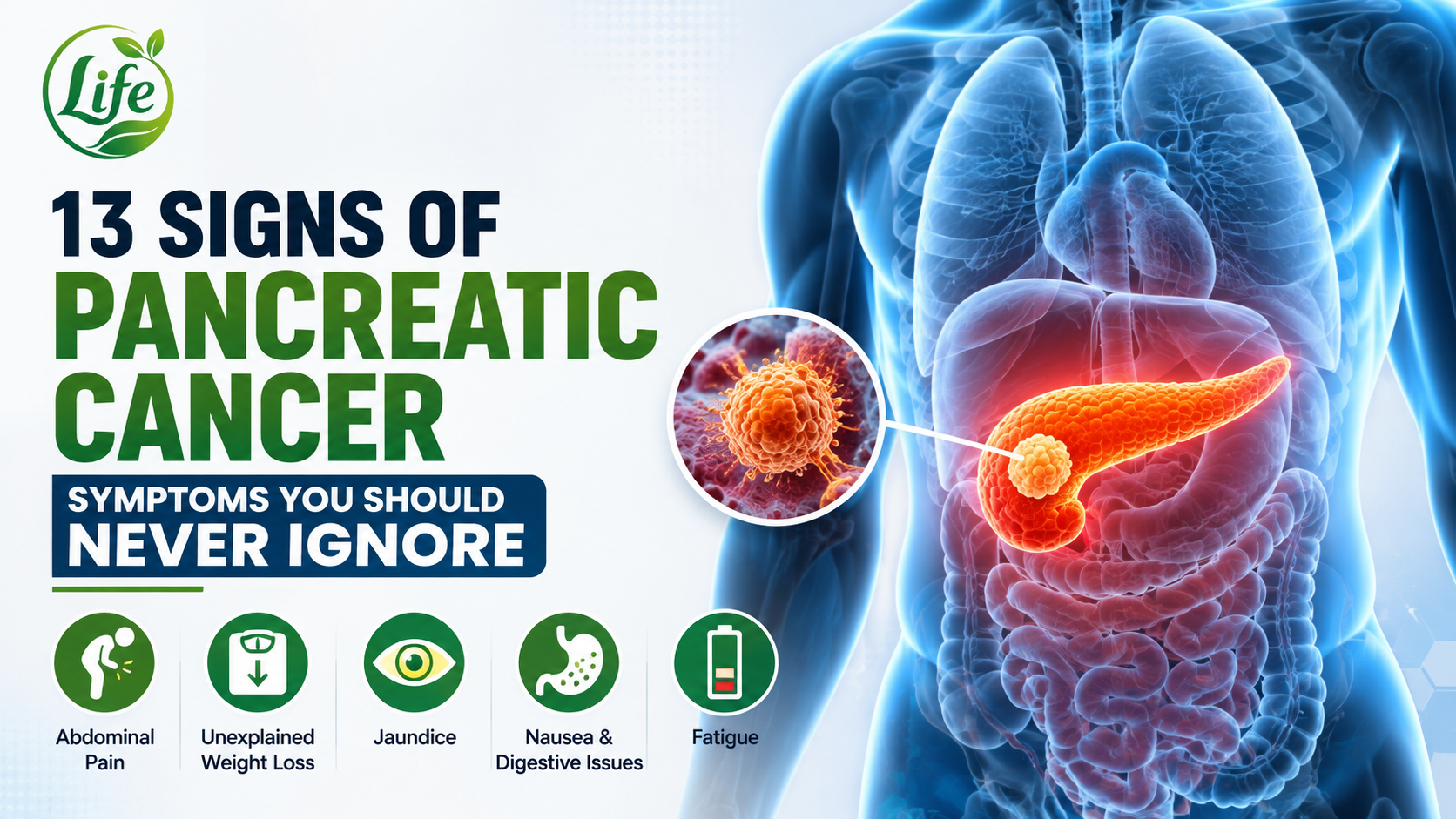

Pancreatic cancer is one of the most challenging cancers to detect in its early stages because symptoms are often subtle or mistaken for other common health conditions. The pancreas is a vital organ located behind the stomach, responsible for producing digestive enzymes and hormones such as insulin.
Recognizing the warning signs early can improve the chances of receiving timely medical care. While these symptoms do not always indicate pancreatic cancer, persistent or unexplained changes should always be evaluated by a healthcare professional.
In this article, we’ll explore the 13 most common signs of pancreatic cancer, risk factors, diagnosis, treatment options, and when you should seek medical attention.
What Is Pancreatic Cancer?
Pancreatic cancer occurs when abnormal cells begin growing uncontrollably within the pancreas. The most common type is pancreatic ductal adenocarcinoma, accounting for approximately 90% of cases.
Unfortunately, because symptoms often develop late, many patients are diagnosed after the cancer has already spread.
1. Persistent Upper Abdominal Pain
One of the earliest symptoms is a dull pain in the upper abdomen.
The pain may:
- Spread to the middle or lower back
- Become worse after eating
- Increase when lying down
- Improve slightly when leaning forward
The discomfort may come and go initially before becoming constant.
2. Unexplained Weight Loss
Sudden weight loss without dieting or increased exercise can be an important warning sign.
People with pancreatic cancer often lose weight because:
- Appetite decreases
- Digestion becomes impaired
- The body burns more energy due to cancer-related inflammation
Any unexplained loss of more than 5% of body weight should be discussed with a physician.
3. Yellowing of the Skin and Eyes (Jaundice)
Jaundice is among the most recognizable symptoms.
It occurs when a tumor blocks the bile duct, causing bilirubin to build up in the bloodstream.
Signs include:
- Yellow skin
- Yellow eyes
- Dark urine
- Pale stools
- Itchy skin
Jaundice often appears before abdominal pain in cancers located in the head of the pancreas.
4. Loss of Appetite
Many patients notice they no longer feel hungry.
Even favorite foods may become unappealing.
This symptom often develops gradually and may contribute significantly to weight loss.
5. New-Onset Diabetes
The pancreas produces insulin, the hormone responsible for regulating blood sugar.
For some adults—especially those over age 50—developing diabetes unexpectedly may sometimes be an early sign of pancreatic cancer.
Doctors may investigate further if diabetes appears suddenly alongside weight loss or abdominal pain.
6. Nausea and Vomiting
As tumors grow, they may press against the stomach or small intestine.
This can cause:
- Nausea
- Vomiting
- Feeling full quickly
- Difficulty digesting food
Persistent digestive symptoms should never be ignored.
7. Changes in Stool
The pancreas produces enzymes needed to digest fats.
When enzyme production decreases, stools may become:
- Pale
- Greasy
- Floating
- Difficult to flush
- Foul-smelling
This condition is called steatorrhea, indicating poor fat digestion.
8. Chronic Fatigue
Extreme tiredness that does not improve with rest is common in many cancers.
People may experience:
- Low energy
- Weakness
- Difficulty concentrating
- Reduced physical activity
Cancer-related fatigue is often more severe than ordinary tiredness.
9. Back Pain
Pain that radiates into the middle or upper back may develop as the tumor affects surrounding nerves.
Unlike muscle pain, it often:
- Persists for weeks
- Worsens at night
- Doesn’t improve with stretching
10. Blood Clots
Unexpected blood clots may sometimes be the first sign of pancreatic cancer.
Symptoms include:
- Swelling in one leg
- Redness
- Pain
- Warm skin
If a clot travels to the lungs, it can cause:
- Chest pain
- Shortness of breath
- Rapid heartbeat
This is a medical emergency.
11. Itchy Skin
Buildup of bile salts due to blocked bile ducts may lead to severe itching.
The itching can occur before visible jaundice develops.
Many patients describe it as intense and persistent.
12. Enlarged Gallbladder or Liver
A blocked bile duct may cause enlargement of nearby organs.
Although patients usually cannot detect this themselves, doctors may notice it during:
- Physical examination
- Ultrasound
- CT scan
- MRI
13. Digestive Problems and Bloating
Many individuals experience ongoing digestive discomfort, including:
- Bloating
- Gas
- Indigestion
- Feeling full after small meals
When these symptoms persist for several weeks without a clear explanation, further evaluation may be appropriate.
Risk Factors for Pancreatic Cancer
Several factors may increase the likelihood of developing pancreatic cancer:
- Smoking
- Obesity
- Chronic pancreatitis
- Type 2 diabetes
- Family history of pancreatic cancer
- Certain inherited genetic syndromes
- Older age (especially over 60)
- Heavy alcohol consumption
Having one or more risk factors does not mean someone will develop pancreatic cancer.
How Is Pancreatic Cancer Diagnosed?
Doctors may use several tests, including:
- Blood tests
- CT scan
- MRI
- Endoscopic ultrasound (EUS)
- PET scan
- Biopsy
Early diagnosis often requires a combination of imaging studies and laboratory testing.
Treatment Options
Treatment depends on the stage of the cancer and the patient’s overall health.
Common treatments include:
Surgery
When detected early, surgery offers the best chance for long-term survival.
Procedures may include:
- Whipple procedure
- Distal pancreatectomy
- Total pancreatectomy
Chemotherapy
Chemotherapy helps destroy cancer cells and may be given before or after surgery.
Radiation Therapy
Radiation uses high-energy beams to target cancer cells.
Targeted Therapy
Certain medications target specific genetic mutations found in some pancreatic cancers.
Immunotherapy
Although only suitable for a small percentage of patients, immunotherapy may benefit those with particular molecular characteristics.
When Should You See a Doctor?
Seek medical evaluation if you experience:
- Persistent abdominal pain
- Unexplained weight loss
- Jaundice
- Ongoing digestive problems
- New-onset diabetes after age 50
- Persistent fatigue without explanation
These symptoms do not necessarily mean cancer is present, but prompt medical assessment is important.
Can Pancreatic Cancer Be Prevented?
While prevention isn’t always possible, healthy lifestyle choices may reduce risk:
- Avoid smoking
- Maintain a healthy weight
- Exercise regularly
- Eat plenty of fruits and vegetables
- Limit processed meats
- Reduce alcohol intake
- Manage diabetes effectively
Final Thoughts
Pancreatic cancer is a serious disease that often develops silently. Understanding its early warning signs can encourage timely medical evaluation and improve the chances of earlier diagnosis. Symptoms such as unexplained weight loss, persistent abdominal pain, jaundice, digestive changes, or new-onset diabetes should never be ignored.
Remember, many of these symptoms can also result from less serious conditions. Only a qualified healthcare professional can determine the underlying cause and recommend appropriate testing and treatment.
Medical Disclaimer: This article is intended for educational purposes only and should not be considered medical advice. Always consult a licensed healthcare provider for diagnosis, treatment, or any concerns about your health.